
How the Right Picture Frame Can Elevate Your Home
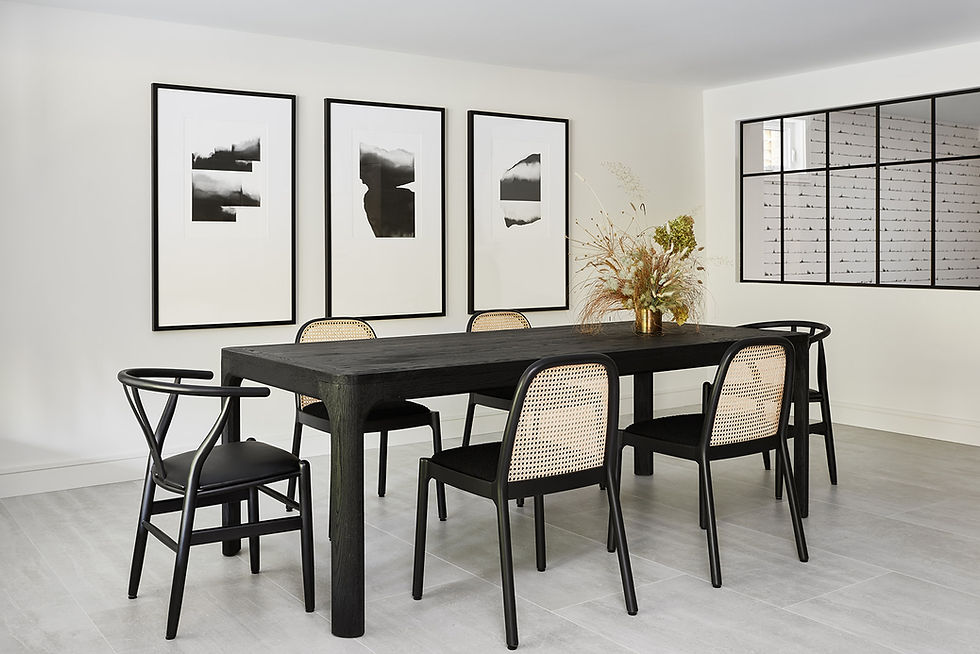
Choosing the right picture frame can completely change how artwork looks in your home. Whether you're framing original art, family photographs, vintage finds, or children's artwork, thoughtful framing helps every piece feel intentional and connected to the rest of your home.
I often think about picture framing while we're selecting furniture, finishes, and lighting—not after everything is installed. The right frame helps artwork relate to the architecture of the room and reinforces the material palette we've already established. It's the same approach we take in how to finish a room like an interior designer, where every layer contributes to the overall composition. That's what makes a home feel cohesive rather than a box that has been decorated.
Thoughtful framing transforms artwork into part of the design rather than something that's simply hanging on the wall. Although it's one of the final steps in completing a project, it's something we begin thinking about during the furnishing stage (and sometimes even earlier).
Here are a few of the framing approaches we return to again and again when creating homes that feel layered, intentional, and custom.
Let the Frame Add Character
A frame doesn't have to disappear or be neutral in order to suit everything else in the space.
The best frames contribute to the room, picking up on surrounding materials and adding another layer of interest. Warm oak, walnut, aged brass, painted wood, glossy, ornate detailing, or slim metal profiles all create a different feeling.
Sometimes the frame is quiet. Sometimes it's the statement. Choosing something beyond standard black or white is often what gives a room its personality. Start with the artwork itself. Let its colour, mood, and character guide the frame you choose.
If you're interested in how artwork influences the way we design and live in our own home, I've shared more in how I use art to shape a home.
For my daughter's room, we wanted to play into the whimsical nature of these paintings by the one and only Maryam Keyhani - and so I opted for a high-gloss deep red frame in an ornate profile. It adds another layer of texture while grounding the bright colours in the paintings.

Oversized Mats Create Presence
One of our favourite ways to elevate artwork is surprisingly simple: give it more breathing room.
An oversized mat instantly makes artwork feel more considered and gallery-inspired. It creates negative space around the piece, allowing your eye to focus on the artwork while giving it a stronger presence on the wall.
As a general rule, if you're framing something that wasn't originally intended to be displayed as fine art—a postcard, sketch, vintage document, textile, or tile—an oversized mat can completely change how it's perceived.
Art framed in LNS Project 04
Mix Materials for a Collected Look
Homes feel most personal when everything doesn't match perfectly. The same philosophy applies to framing.
Mixing wood tones, metal finishes, frame profiles, and mat colours creates depth and gives artwork the feeling that it has been collected over time rather than purchased all at once. It's the same philosophy behind a return to meaningful interiors: what 2026 reveals about how we want to live—creating homes that evolve over time through thoughtful choices rather than trends.

The goal isn't for every frame to match—it's for every piece to feel like it belongs.
This goes for the mats themselves as well. They don't all have to be white. Experiment with darker mats—black, navy, or maroon—or even textiles. Yes, fabric can be used as matting. For Gaia's room, I used a beautiful suede mat that takes the paintings to another level. It’s just fantastic!
Placement Should Feel Connected to the Room
Artwork shouldn't float independently on a wall. Well, it can, so long as it contributes to the overall composition of the room. It should relate to the furniture beneath it, reinforce the architecture of the space. Every object in a space should contribute to the overall composition rather than compete for attention.

At Project 30, we approached the wall at the bottom of the stairs as a complete installation, considering both the wall sconce and surrounding artwork together. The painted tile sconce acts almost like another piece of art, complementing a small oil painting and a larger print.
We also often hang artwork lower than expected. Eye level isn't a universal rule—the correct height depends on the furniture, architecture, and how the room is experienced.

In the same project, we framed a family travel photograph with a mat that matched the wall colour so it almost disappeared into the architecture. We intentionally hung it lower beside a reading chair, creating a quieter, more unexpected moment.
Don't Forget the Glass
The glass you choose can make just as much of a difference as the frame itself.
For original artwork or sentimental pieces, we often recommend museum glass or anti-reflective glass. It significantly reduces glare, making the artwork easier to enjoy from every angle, while UV protection helps preserve the piece over time.
It's an upgrade we don't recommend for every project, but for artwork you'll live with for years, it's often well worth the investment.
When Is Custom Framing Worth It?
Not every piece requires custom framing (but truthfully now I’m addicted to custom framing and I can’t stop) - but not every frame needs to be custom.
We typically recommend investing in custom framing for original artwork, sentimental pieces, unusual sizes, or anything intended to become a permanent part of your life.
Ready-made frames are a great solution for standard-sized prints or artwork that may change over time. If your budget is more limited, companies like Opposite Wall and Etsy offer custom mat sizes and colours that can instantly elevate a standard IKEA frame.
Throughout our projects, from Gaia's room to Project 30, we think about framing as another design layer, not a finishing task. It's considered alongside materials, lighting, colour, and architecture because every detail contributes to how a home feels.
Like carefully selected materials, thoughtful millwork, and the finishing touches that complete a room, framing is one of those details people may not notice on its own, but they feel the difference. It's another layer that makes a home feel considered, personal, and complete.


Comments